

Blog
The Role of CNC Machinery in Modern Window Fabrication

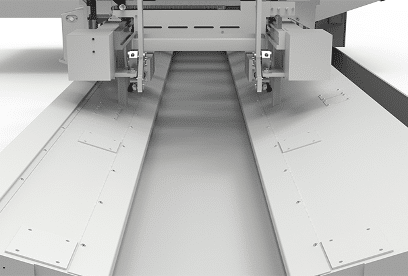
Window fabrication has changed dramatically over the past two decades. Where skilled operators once relied on manual measurements, hand tools, and years of accumulated experience to produce each frame, today’s leading manufacturers depend on CNC (Computer Numerical Control) machinery to deliver faster, more accurate, and more consistent results at scale.
If you work in the fenestration industry and you are researching CNC machinery, this guide will walk you through what it does, why it matters, and how it is reshaping production floors across the UK.
What Is CNC Machinery in Window Fabrication?
CNC machinery refers to automated equipment that follows pre-programmed digital instructions to perform cutting, drilling, milling, routing, and other precision operations on PVCu or aluminium profiles. Rather than relying on an operator to manually control each step, the machine executes precise commands, often down to fractions of a millimetre, with minimal human intervention.
In window fabrication, CNC technology is applied across several types of equipment, including profile machining centres, copy routers, CNC welding machines, and automated sawing machines. Each plays a distinct role in the overall production process, but they share one common goal: removing variability and improving consistency.
Key Stages Where CNC Machinery Makes a Difference
1. Profile Cutting and Sawing
Accurate cutting is the foundation of a quality window frame. If profiles are cut even slightly off-angle or at the wrong length, it creates problems downstream, from poor corner joins to increased rework.
CNC-controlled sawing machines use programmable settings to deliver exact cut lengths and angles, time after time. This consistency dramatically reduces the amount of scrap material produced and helps fabricators maintain tight tolerances across large production runs.
2. Profile Machining and Routing
Once profiles are cut to length, they typically need a range of machining operations, drilling, routing, milling, and marking, to accommodate hardware, drainage slots, and locking mechanisms. Doing this manually is slow and prone to error.
CNC profile machining centres automate these operations in a single setup. The operator loads the profile, the machine reads the programme, and every hole, slot, and channel is placed exactly where it needs to be. This is particularly valuable for manufacturers producing multiple window designs, where parameters change frequently between jobs.
3. Welding
For PVCu window fabrication, welding is one of the most critical operations. A poorly executed weld undermines the structural integrity of the frame and creates quality defects that are difficult and costly to correct.
Modern CNC welding machines, including seamless welders, use precision temperature and timing controls to produce consistently strong and clean welds. Many systems allow profile-specific parameters to be stored digitally, so the correct settings are applied automatically for each job, removing guesswork and reducing defects.
4. Corner Cleaning
After welding, excess material must be removed from the corners of PVCu frames. This has traditionally been a time-consuming manual task, but CNC-controlled corner cleaning machines can do the same work faster and with a much higher degree of consistency, producing a cleaner finish across every unit.
Why CNC Technology Is Central to Modern Fenestration
Precision at Scale
Manual fabrication can produce high-quality results, but maintaining that quality across hundreds or thousands of units is difficult. CNC machinery removes the variability introduced by operator fatigue, skill differences, and manual measurement. Every frame is produced to the same specification, regardless of how many have come before it.
Reduced Waste
Precision cutting and machining means less scrap material. When every cut is accurate and every operation is performed correctly the first time, the amount of wasted profile material falls significantly. This is important both for cost control and for sustainability, and it has a direct impact on profitability.
For fabricators looking to address this further, Haffner’s blog on How to Reduce Waste in PVCu Window Manufacturing covers practical strategies in detail, from cutting accuracy to integrated systems.
Higher Throughput
CNC machinery operates faster than manual processes, often significantly so. Automated machining centres can complete multiple operations in a single pass, reducing cycle times and allowing manufacturers to increase output without adding headcount. For businesses looking to grow, this scalability is a major advantage.
Lower Labour Dependency
The UK manufacturing sector has faced increasing pressure from labour shortages and rising wage costs. CNC automation allows operators to manage workflow and oversee multiple machines rather than performing every task by hand. This not only improves productivity per employee but also reduces the risk of errors caused by human fatigue.
The Ability to Handle More Complex Products
As consumer expectations evolve, fabricators are being asked to produce increasingly complex window designs, slim sightlines, flush sash systems, and bespoke configurations. CNC machinery gives manufacturers the capability to take on this work consistently and profitably. Manual processes, by contrast, can struggle to keep pace with more demanding specifications.
Manual vs Automated: Understanding the Spectrum
Not every fabricator needs a fully automated production line. The right level of CNC automation depends on production volume, workforce, budget, and growth plans.
Haffner’s blog on Manual vs Semi-Automatic vs Fully Automatic Window Machinery provides a useful breakdown of each approach:
- Manual machinery suits smaller fabricators and bespoke production, with lower upfront costs but higher labour requirements.
- Semi-automatic machinery strikes a balance, automating key operations while still relying on operator input, making it a practical step-up for growing businesses.
- Fully automatic systems are designed for high-volume manufacturers who need maximum throughput, consistency, and minimal operator involvement.
CNC technology is most prominent in semi-automatic and fully automatic systems, where it delivers the greatest return on investment. However, even some entry-level machines now incorporate CNC controls for specific operations, so the line between the categories is becoming less distinct.
Signs Your Current Machinery Is Holding You Back
Investing in CNC technology is often prompted by a recognition that existing equipment is no longer performing at the level the business needs. Common warning signs include rising maintenance costs, inconsistent product quality, slower-than-competitive turnaround times, and an inability to take on new product types.
Haffner’s blog on Signs It’s Time to Upgrade Your Window and Door Machinery sets out these indicators clearly. If several of them resonate with your current situation, it is likely that investing in modern CNC-controlled machinery would deliver a measurable return.
What to Look for in CNC Window Fabrication Equipment
When evaluating CNC machinery for window fabrication, there are several practical factors to consider.
Accuracy and repeatability. The core value of CNC machinery is its ability to produce the same result consistently. Look for specifications that confirm the tolerance levels the machine can reliably maintain across a production run.
Integration with your production line. CNC machinery works best when it is part of a joined-up workflow. Equipment that integrates with your cutting lists and production software allows for optimised material usage and fewer handoffs between stages.
Programming flexibility. The ability to store and switch between job profiles quickly is important if you produce a range of window types. Modern CNC systems should allow you to move between different specifications without lengthy setup times.
After-sales support. CNC equipment is a significant investment. Reliable technical support, training, and parts availability from the supplier are essential for minimising downtime and protecting the value of that investment.
How Haffner Supports CNC Window Fabrication
Haffner Ltd has been supplying window fabrication machinery to the UK market for decades, and CNC technology sits at the heart of much of their product range. Their portfolio includes CNC machining centres, profile machining systems, automated saws, and welding equipment for both PVCu and aluminium fabrication.
Haffner works with fabricators at every stage of the automation journey, from businesses investing in their first CNC-controlled machine to established manufacturers looking to extend or upgrade a high-volume production line. Their team provides expert guidance on the right solution for each operation, taking into account production volume, space, budget, and long-term goals.
Their machinery is supported by a dedicated service team, with training and ongoing technical support to help customers get the most from their investment.
Ready to Find the Right CNC Machinery for Your Business?
CNC technology is no longer reserved for the largest manufacturers. The range of available machinery now means that businesses of all sizes can benefit from greater precision, reduced waste, and improved throughput.
Whether you are looking to take your first step towards automation or are planning a significant upgrade to your production line, speaking to a specialist is the right starting point.
Contact Haffner Ltd today to discuss your requirements and find the right CNC machinery for your window fabrication operation.
Call: +44 1785 222421 Email: info@haffnerltd.com Or visit: haffnerltd.com/contact